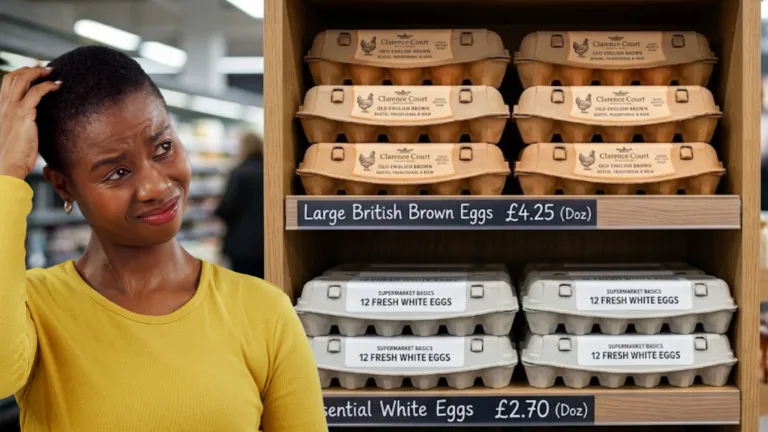
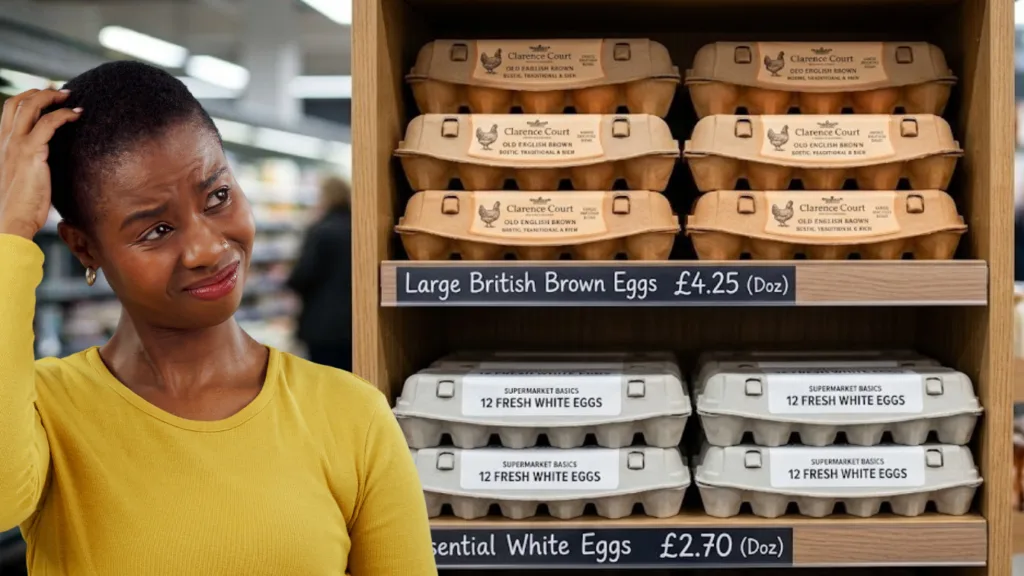
If you’ve walked down the egg aisle of a British supermarket lately, you’ve likely noticed a significant price gap. On one side, the “premium” large brown eggs nestled in rustic-style cardboard; on the other, the increasingly rare white eggs, often sold at a much lower price point. As of April 2026, new consumer data suggests that the average UK household is spending an extra £45 per year based on a single, persistent food myth: that brown eggs are healthier, more natural, or higher in quality than white ones.
The 2026 Egg Market: The Uncomfortable Truth 🥚
- Nutritional Parity: Laboratory testing in 2026 confirms zero difference in protein, Vitamin D, or Omega-3 levels between white and brown shells.
- The ‘Rustic’ Tax: Marketing experts admit that brown packaging and shells trigger a “farm-fresh” psychological response, allowing for a 30% price markup.
- Genetics, Not Diet: The colour of an egg is determined solely by the breed of the hen, not the quality of its feed or its “outdoor” lifestyle.
- The White Egg Comeback: Major retailers like Tesco and Waitrose are reintroducing white eggs to combat 2026 food inflation, yet many shoppers still avoid them.
- Shell Strength: Contrary to popular belief, the thickness of the shell is related to the age of the hen, not the colour of the egg.
Did you know? In the UK, we have been “conditioned” to prefer brown eggs since the 1970s. However, in many other parts of the world—including the USA and parts of Scandinavia—white eggs are the standard. The preference is entirely cultural, not biological.
Why British Shoppers Are Falling for the ‘Farmhouse’ Aesthetic
The “Brown Egg Scam” is a masterclass in modern food branding. In the post-pandemic era, UK consumers have become obsessed with “provenance” and “authenticity.” Supermarkets have capitalised on this by associating white eggs with industrial, high-intensity farming, while brown eggs are framed as “traditional.”
In reality, a caged hen can lay a brown egg, and a high-welfare, organic, pasture-raised hen can lay a white egg. By choosing the brown carton simply because it “looks more organic,” British shoppers are essentially paying a “visual tax” that has no impact on the taste or the nutritional value of their morning omelette.
The Science: Why the Colour Really Changes
The secret to egg colour isn’t found in the haystack; it’s in the earlobes. As a general rule of thumb used by poultry experts, hens with white earlobes lay white eggs (like the Leghorn breed), while hens with red earlobes lay brown eggs (like the Rhode Island Red).
As we move through 2026, poultry farmers are increasingly switching back to white-egg-laying breeds because they are often more feed-efficient. This means they require less grain to produce the same amount of protein. By choosing white eggs, you aren’t just saving money; you are often supporting a more carbon-efficient form of farming that requires fewer resources per egg.
The ‘Yolk Test’: What Actually Dictates Quality?
If you want to know if an egg is high quality, don’t look at the shell—look at the yolk. The deep orange colour many of us crave is a result of the hen’s diet, specifically the intake of carotenoids (found in grass, marigold petals, or specific high-quality corn).
A brown-shelled egg from a hen fed on basic grain will have a pale yellow yolk, while a white-shelled egg from a free-range hen will have a rich, orange yolk. In 2026, savvy shoppers are ignoring the “shell trap” and looking for RSPCA Assured or British Lion marks, which dictate welfare and safety standards regardless of the colour of the bird that laid it.
How to Save 30% on Your Weekly Shop
With food prices remains a key concern for UK households this April, switching to white eggs—or simply the “Value” range of brown eggs—is one of the easiest ways to trim your grocery bill. Most “Budget” ranges are simply eggs that are slightly smaller or have minor shell imperfections, but they undergo the same rigorous safety testing as the “Luxury” selections.
Consumer groups are calling 2026 “The Year of the White Egg” as retailers try to push back against the “premiumisation” of basic staples. If you see white eggs on the shelf for £1.50 less than the brown ones, grab them—you are getting the exact same nutrition for a fraction of the cost.
Frequently Asked Questions (FAQ)
Do white eggs taste different from brown eggs? In blind taste tests conducted by food scientists in early 2026, participants were unable to distinguish between the two. Any perceived difference in taste is usually down to the freshness of the egg or the specific diet of the hen, not the shell colour.
Are white eggs bleached? No. This is a common UK myth. The shells are naturally white from the moment they are laid. No chemicals or bleaching agents are used to alter the colour of supermarket eggs.
Why are brown eggs sometimes harder to peel? Peeling difficulty is related to the freshness of the egg, not the colour. Very fresh eggs have a membrane that sticks tightly to the shell. As an egg ages slightly, the pH level changes and an air pocket forms, making it easier to peel—regardless of whether it’s brown or white.
Conclusion: Don’t Pay for the Packaging
The “Brown Egg Scam” is a reminder that in 2026, being a “savvy shopper” means looking past the aesthetic and understanding the science. As we all look for ways to make our money go further, let go of the 1970s prejudice against white eggs.
Next time you’re in the dairy aisle, remember: the hen doesn’t care about the colour of the shell, and your body doesn’t either. Save that 30% markup for something that actually matters—like better quality meat or fresh UK-grown produce.
Eat well, shop smarter!