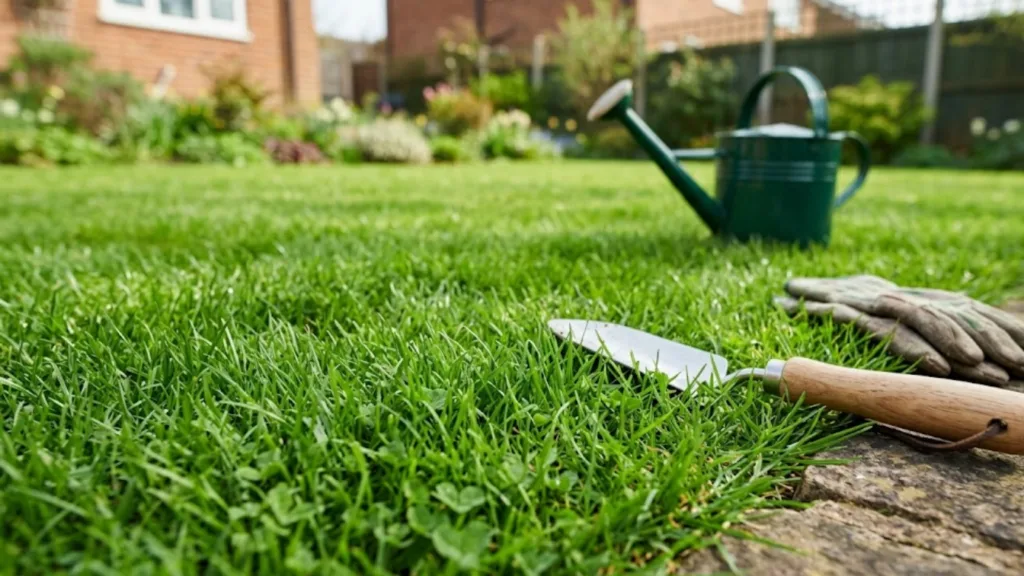
As April 2026 brings the first consistent sunshine to the UK, the familiar hum of lawnmowers is beginning to echo across British suburbs. However, environmental experts and structural engineers have issued an unusual joint warning this season: stop cutting your grass too short. Dubbed the ‘One-Inch Rule,’ new research suggests that the traditional “bowling green” look—where grass is shorn to the root—could be causing silent damage to UK properties while drastically increasing water bills during what is forecasted to be a dry spring.
The April 2026 Gardening Shift: The Essentials 🌿
- Soil Hydration: Grass kept at least 2.5cm (one inch) or longer creates a “canopy” that prevents the UK’s increasingly volatile spring sun from baking the topsoil.
- Foundation Protection: In clay-heavy regions like London and the South East, moisture-depleted soil can shrink, leading to “subsidence-style” cracks in garden walls and patios.
- The ‘No Mow’ Evolution: While “No Mow May” is a staple, 2026 data shows that “Low Mow April” is more critical for root establishment.
- Biodiversity Credits: Emerging 2026 UK land-use trends suggest that “wilder” lawns can actually increase a property’s “Green Score” for future valuations.
- Weed Suppression: Taller grass naturally shades out moss and clover, reducing the need for expensive chemical fertilisers.
Did you know? For every centimetre of grass you leave above ground, the roots extend roughly two centimetres deeper into the earth. Shaving your lawn too short effectively “strangles” the root system, making your garden far more susceptible to the “brown patch” syndrome seen in recent UK summers.
Why “Scalping” Your Lawn is a Financial Mistake
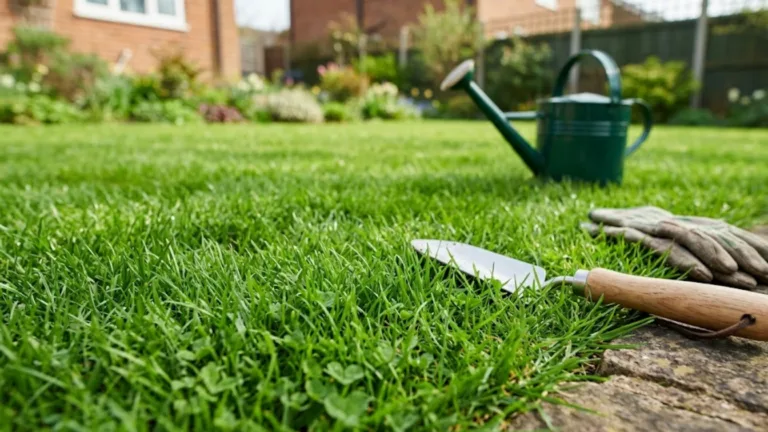
In the UK, we have a cultural obsession with a “manicured” lawn. However, “scalping”—the act of setting your mower to its lowest possible setting—is one of the most expensive mistakes a homeowner can make in 2026. When grass is cut below one inch, it enters a state of shock. It diverts all its energy from root growth to leaf repair.
This creates a vicious cycle: the grass becomes weak, the soil dries out, and you end up spending a fortune on water and “lawn reviver” products. By following the One-Inch Rule, you allow the lawn to become self-sufficient. Taller grass acts as a natural mulch, trapping the morning dew and keeping the ground cool, which protects the vital microorganisms that keep your garden healthy.
The Structural Link: Can a Lawn Protect Your House?
It sounds far-fetched, but structural engineers are increasingly looking at “Garden Hydration” as a factor in property maintenance. Much of the UK is built on shrinkable clay soil. When we experience a dry April followed by a hot May, the soil around house foundations can contract.
A lawn that is cut too short allows the ground to dry out much faster and deeper. By maintaining a thicker, longer “carpet” of grass, you help maintain a consistent moisture level in the soil surrounding your home. While a long lawn won’t fix existing subsidence, it acts as a buffer zone against the extreme soil-shrinkage cycles that have become more common in the mid-2020s.
How to Transition to the ‘One-Inch’ Method
If you’ve already given your lawn its first “big shave” of the year, don’t panic. The transition to the One-Inch Rule is simple. Set your mower to its highest setting for the next three cuts. This encourages the grass blades to thicken (a process called “tillering”).
Once the lawn feels “springy” underfoot rather than “stiff,” you can gradually lower the mower, but never go below the one-inch (2.5cm) mark. In 2026, the most successful UK gardeners are those who embrace the “shaggy but neat” look, often leaving a “wild border” around the edges of the lawn to further protect soil moisture and support local pollinators.
The 2026 ‘Green Value’ Trend
As the UK property market evolves, “Climate Resilience” is becoming a buzzword. Surveyors in 2026 are beginning to note the health of a property’s landscape. A scorched, yellow, “over-mown” lawn is a sign of a high-maintenance property that is vulnerable to drought. Conversely, a lush, deep-green lawn maintained under the One-Inch Rule suggests a well-managed, resilient environment.
By putting away the mower this week, you aren’t just being “lazy”—you are performing vital maintenance that protects your soil, your house, and your bank balance.
Frequently Asked Questions (FAQ)
Doesn’t long grass attract more pests like ticks? In a standard domestic garden, keeping grass at 1–2 inches does not significantly increase the risk of ticks, which prefer much longer, “meadow-style” grass. It does, however, encourage “beneficial” insects like ground beetles that eat common garden pests like slugs.
Will my lawn look “messy” if I don’t cut it short? Not at all. The key is “regularity over depth.” If you cut your lawn frequently but keep the blades high, it will look thick, lush, and professional—similar to the turf seen on high-end golf course fairways, which are rarely “scalped” to the soil.
What if it rains a lot this April? If the UK experiences a typical “April Shower” season, the One-Inch Rule is even more important. Taller grass helps prevent “run-off” and soil erosion, ensuring the water actually soaks down to the roots rather than just sitting on the surface and creating mud patches.
Conclusion: Let Your Garden Breathe
The ‘One-Inch’ rule is a shift in mindset for the British gardener. It’s about working with nature rather than trying to beat it into submission with a petrol mower. As we face more unpredictable weather patterns in 2026, the healthiest gardens will be the ones that are allowed to grow a little taller.
This week, give your mower a rest. Take a look at your lawn and remember: that extra inch of green is the best insurance policy your garden—and your home—can have.
Happy gardening for 2026!